
Many fresh products cross borders before they reach the shelf.
New fresh supply
Freshness is created where people live, shop and consume.
The future of fresh supply is not created at the other end of Europe. It is created close to urban areas, close to retail structures and close to actual demand.
Indoor farming is the next development stage of modern food production. Not as a replacement for conventional agriculture, but as an intelligent complement for products with a strong freshness effect: microgreens, herbs, leafy greens and premium salads.
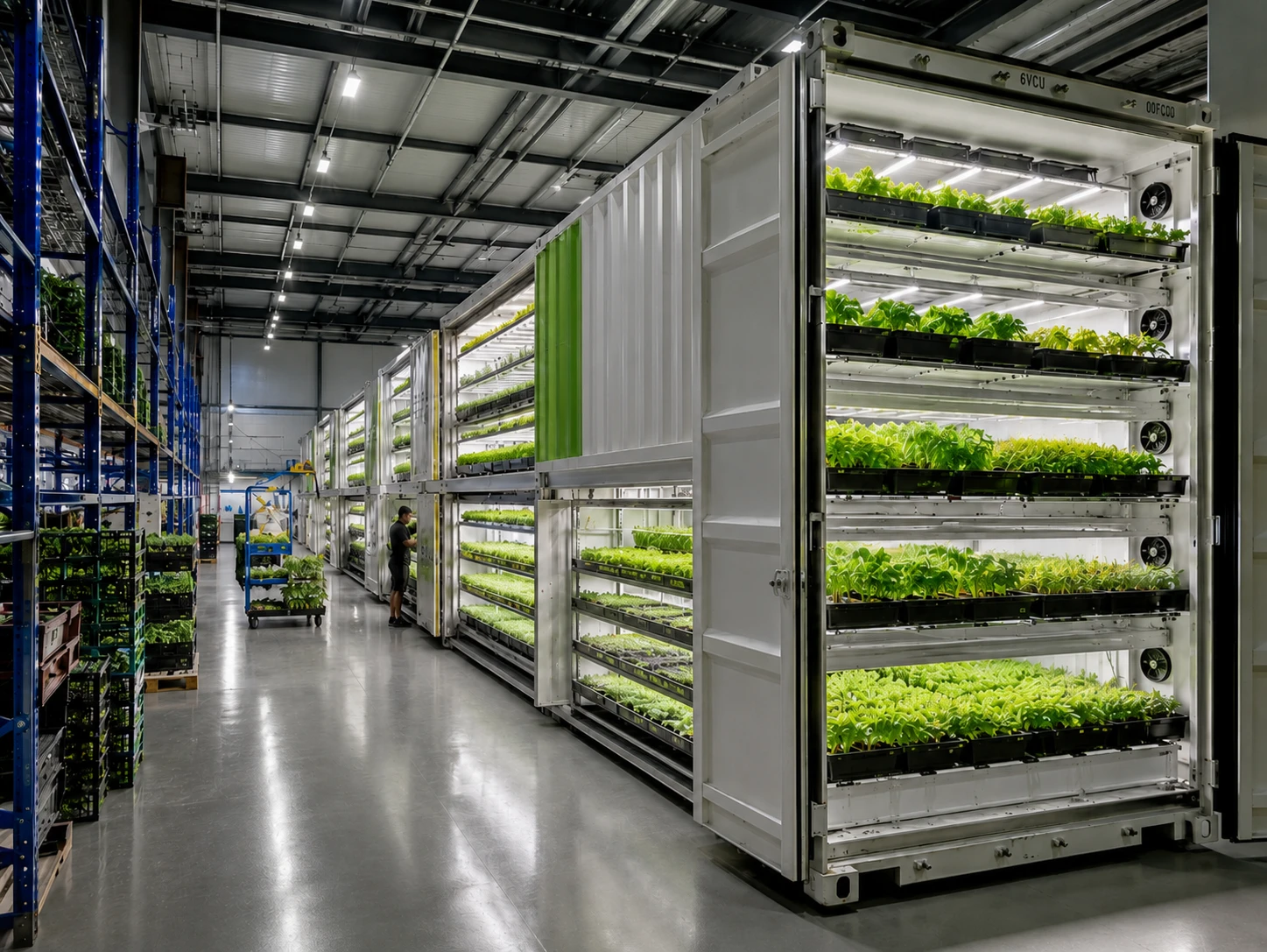
In closed vertical growing systems, light, water, nutrients, temperature, humidity and harvest timing are controlled, documented and optimized. This creates production that works year-round - independent of weather, seasons and long supply chains.
Why it becomes necessary
The fresh food system needs a resilient complement.
Fresh products are sensitive. Every transport day costs quality, every interruption in the supply chain increases waste and every heat wave, drought period or water restriction makes supply less secure.
Germany relies heavily on imports for many vegetables and fresh products. Indoor farming brings production closer to the market, shortens routes, reduces dependencies and makes freshness predictable.
Weather extremes and water restrictions make traditional growing regions less predictable.
Every additional day affects quality, shelf life and waste.
Leafy crops, herbs and salads need short and stable routes.
System advantage
The advantage lies in controlled architecture.
Indoor farming is not simply agriculture under LED light. The decisive factor is the interaction of climate, water, nutrients, data and logistics.
Controlled climate
Plants grow under stable conditions. Weather extremes, pests and seasonal fluctuations lose influence.
Closed water loop
Water is guided, treated and dosed precisely instead of being lost after single use.
Vertical space efficiency
Multi-level cultivation turns existing halls into local food infrastructure.
Traceability
Every batch can be documented, analyzed and traced.
Germany status
From hype to infrastructure.
The German market has already seen the first wave of vertical farming hype. Some early concepts were technologically exciting, but too energy-intensive, too expensive or too far from concrete demand.
A more mature phase is now emerging: indoor farming as robust supply infrastructure - close to the market, energy- and process-efficient, with clear customer logic and crops where controlled cultivation can truly show its strength.
NRW location
Freshness in the heart of Rhine-Ruhr.
Indoor farming becomes especially strong when production and demand move closer together. In the Rhine-Ruhr metropolitan region, freshness is created where it is needed: close to millions of consumers, retail hubs, gastronomy, hospitality and urban supply chains.
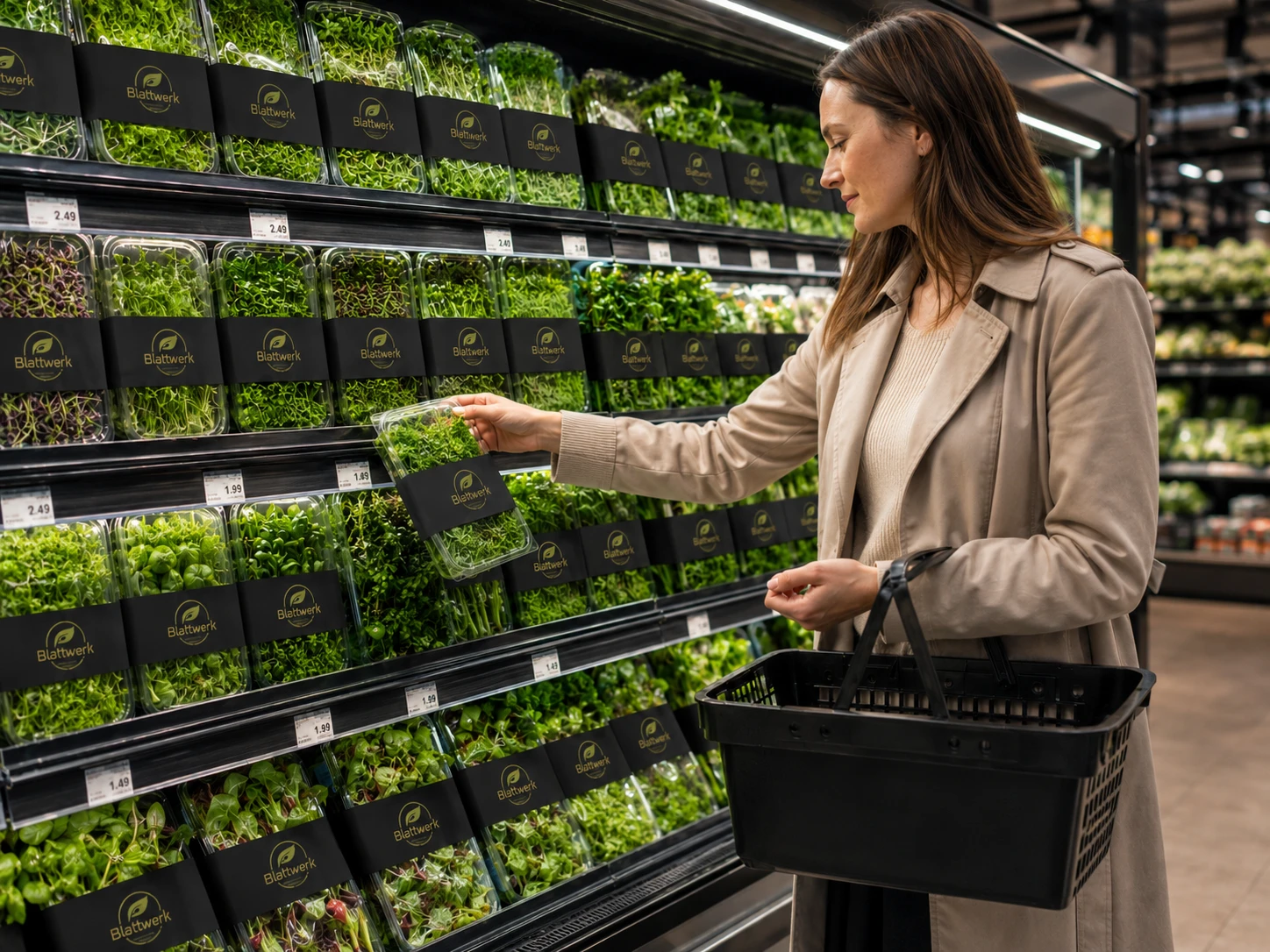
What is harvested in the morning can reach distribution centers, commercial kitchens, restaurants or supermarket shelves within a short time. Less transit time means more residual freshness, better shelf life, less waste and a stronger CO2 balance.
Saxony location
Freshness in the heart of Europe.
A location in Saxony connects regional fresh production with a strong European position. From here, Germany, Poland and Czechia move close together: short routes towards Dresden, Leipzig/Halle, Wrocław and the greater Prague area open access to several sales and logistics regions.
For indoor farming, this position is especially valuable. It connects controlled production with international reach, stable transport corridors and the option to distribute fresh products into multiple markets without relying on long supply chains.
Product portfolio
Local premium freshness from controlled production.
The focus is on products where controlled cultivation can play to its strengths.
01
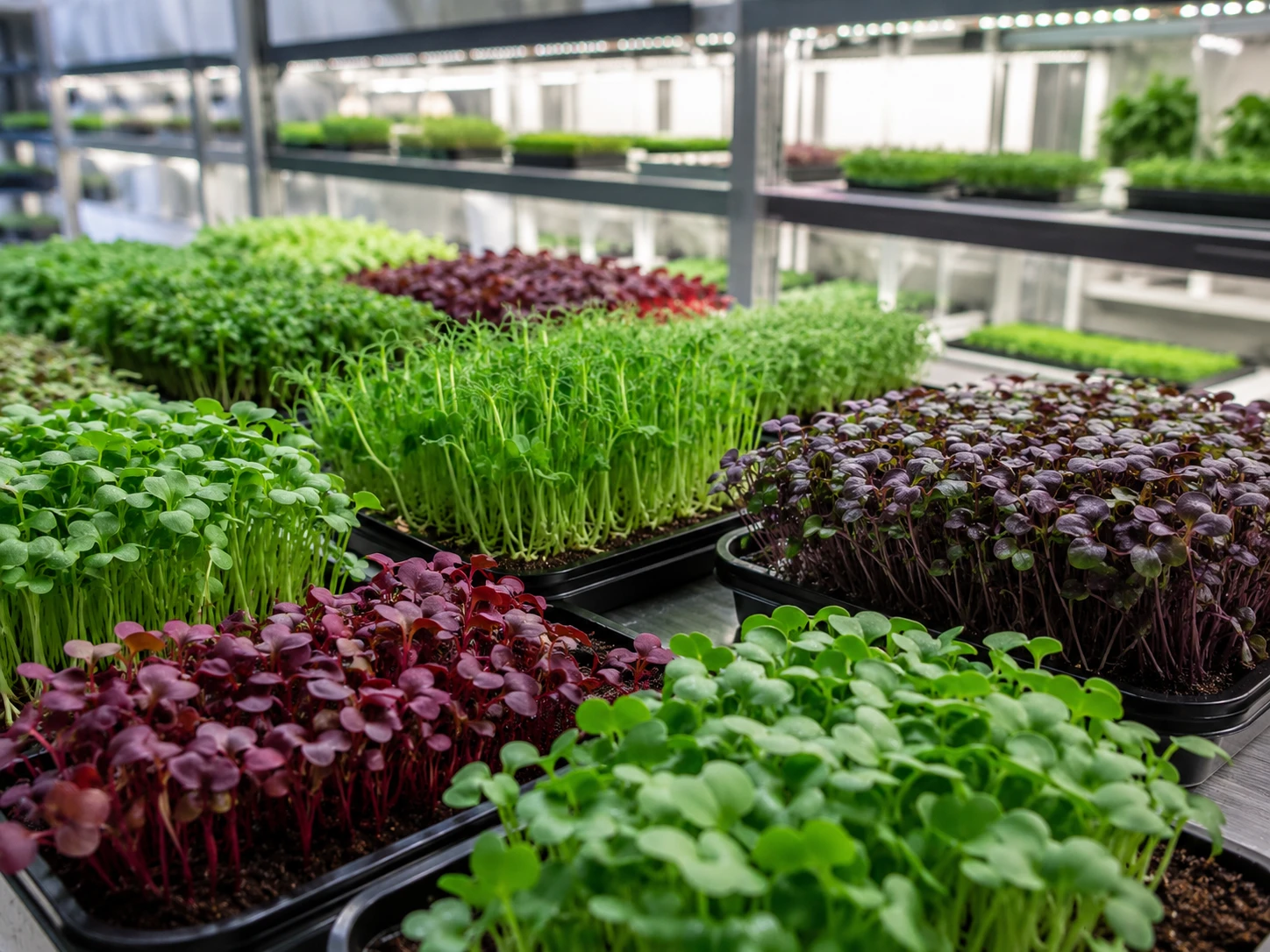
Microgreens
Crops with high nutrient density, short growth cycles and a strong premium effect.
02
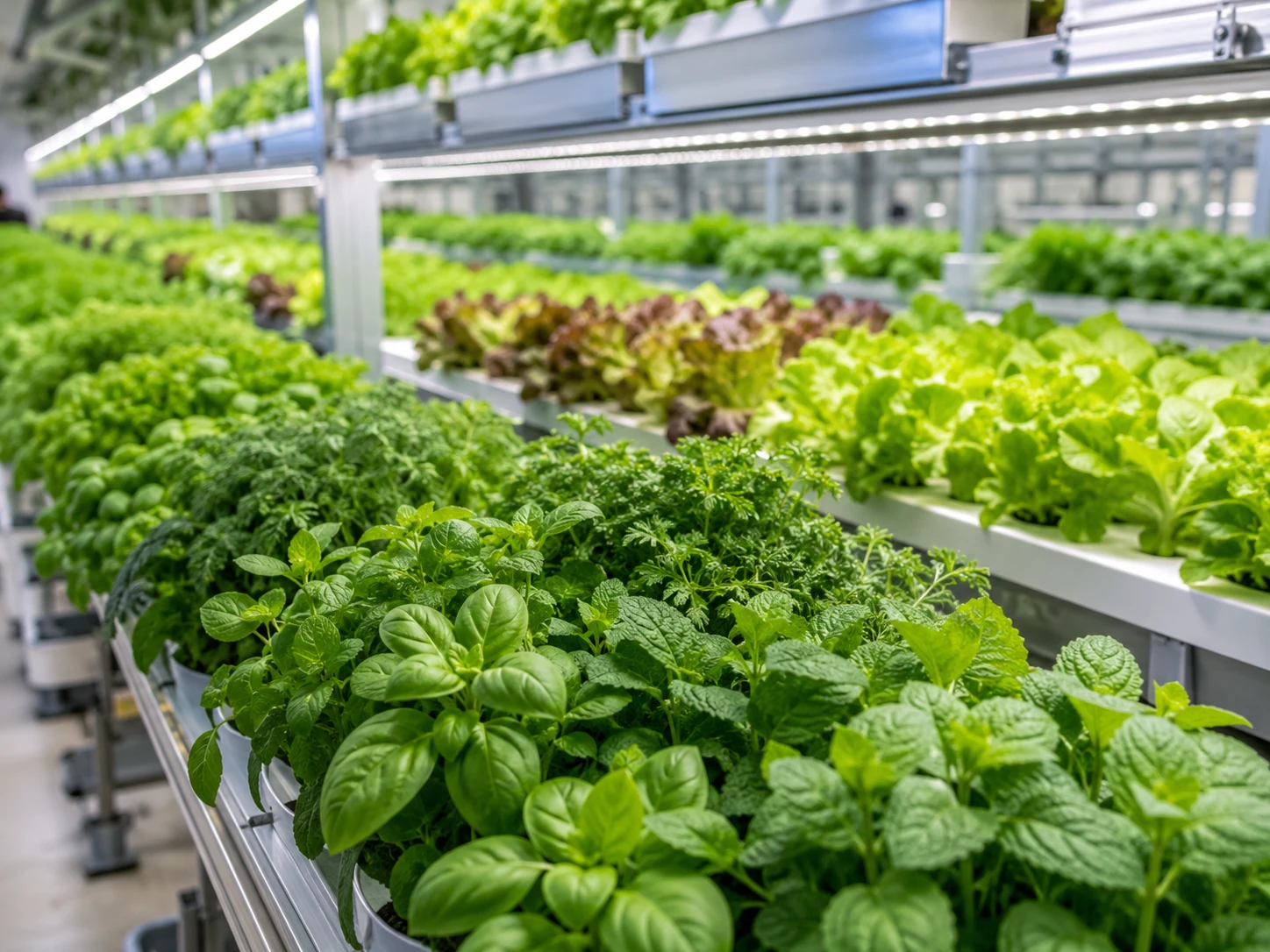
Herbs & leafy greens
Fresh products with short delivery times, stable quality and clear traceability.
03
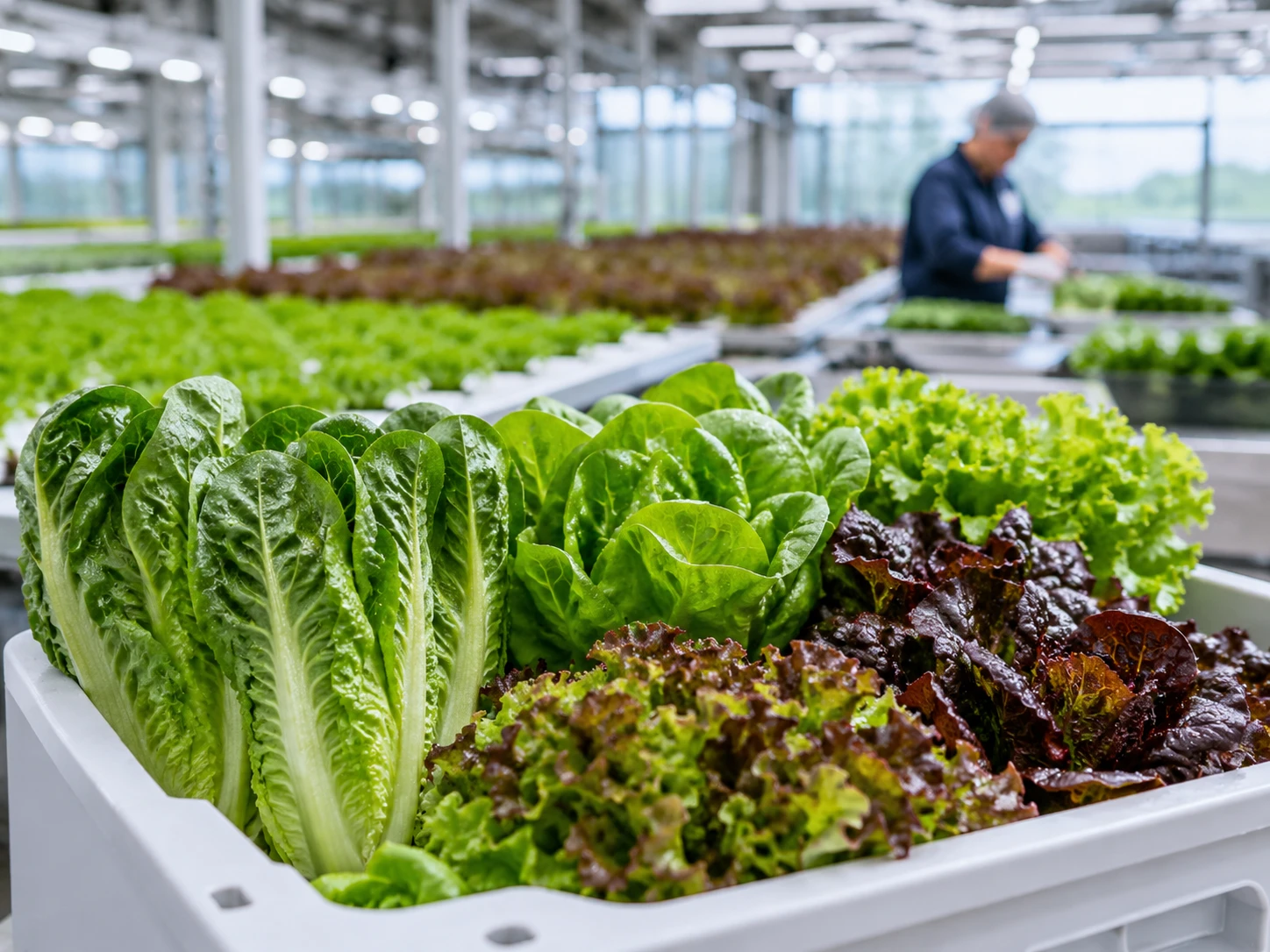
Premium salads
Predictable shelf freshness with high value density and reduced perishability.
Grow-to-Order
Production by demand instead of production on speculation.
Orders, volumes and forecasts flow directly into production planning. Sowing, growth cycles and harvest windows are planned backwards from demand.
Goods are grown, harvested and then pushed through the chain. What has been harvested must be sold - regardless of demand and supply chain conditions.
What is grown is what the market actually needs. This reduces speculation, lowers food waste and increases planning security.
Impact
Sustainable because it is efficient.
Indoor farming is not sustainable because it looks green. It is sustainable when resources are measurably used better.
Closed loops reduce consumption and make water quality controllable.
Controlled conditions and short routes reduce losses along the chain.
Digital traceability makes batches, processes and quality understandable.
More proximity to the market means more freshness time on the shelf.
Conclusion
Freshness becomes predictable.
Indoor farming turns agriculture into precise, local and scalable freshness technology. We develop the infrastructure for it: close to the market, controlled in the process and consistently focused on products where freshness makes the difference.